
PhD: valuable skills, invisible value?

Bastien Marguet - Lyon 1 Université

My website

I. Introduction

Who here is already planning to leave academia in the next few years?

Not only an academic path - France at 3 years

Share of PhDs employed by sector
Sector

Public Research

~42%
Sector

Private Research (R&D)

~38%
Sector

Outside Research

~20%

Public research remains important, private R&D is growing strongly, and a significant share of PhDs already work beyond research.
In France, the PhD already leads beyond academia.

Why does this look different across Europe?

R&D spending and PhD employment profile
Country group

Sweden / Germany

R&D spending (% GDP)
~3.1% to 3.6%

Strong integration into deeptech and industry

Reference point

France

R&D spending (% GDP)
~2.2%

Hybrid model with strong public support via the Research Tax Credit

Country group

Italy / Spain

R&D spending (% GDP)
~1.4% to 1.5%

Stronger dependence on public funding, weaker private absorption

A PhD career is also shaped by national structures.

Why this role exists

National plan

Launch of the “National doctorate plan”.

Structuring action

Unifying tools to better define what a PhD is.

Ambassadors

40 ambassadors across the country,
to relay information and improve visibility of the PhD.

Who I am

Profile
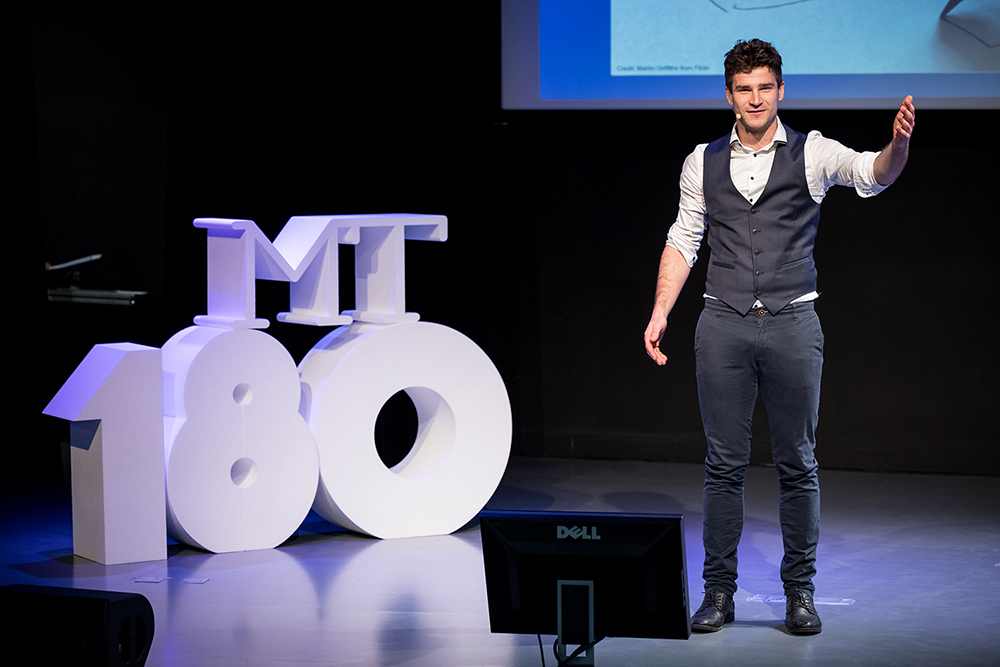
Bastien Marguet speaking on stage during MT180.
Background

PhD in Statistical Physics
Langevin models applied to 2D materials

Current position

Lecturer at the University of Lyon (Maths/Physics)

Teaching / outreach

Workshops on scientific communication
PhD Ambassador AURA

Main directions

Scientific communication from a linguistic perspective
Teaching initiatives, and how to deal with AI in education

Science, communication, education.

The main question

If you had to leave academia tomorrow, what would you be able to sell and how?

II. Your Responses - The Survey

The survey

Participants
39
participants

PhD Student (15)

Postdoc (17)

Researcher / Lecturer (6)

Other (1)

What do these answers reveal?

Self-perception: confidence vs employability

How employable do you feel?

6.3
/ 10

Moderate confidence, but no clear baseline

Clearly employable today

61%
YES

Group is split, strong uncertainty remains

Confidence in skills

7.9
/ 10

High internal confidence, consistent across participants

Strong confidence in skills but weaker and fragmented perception of employability

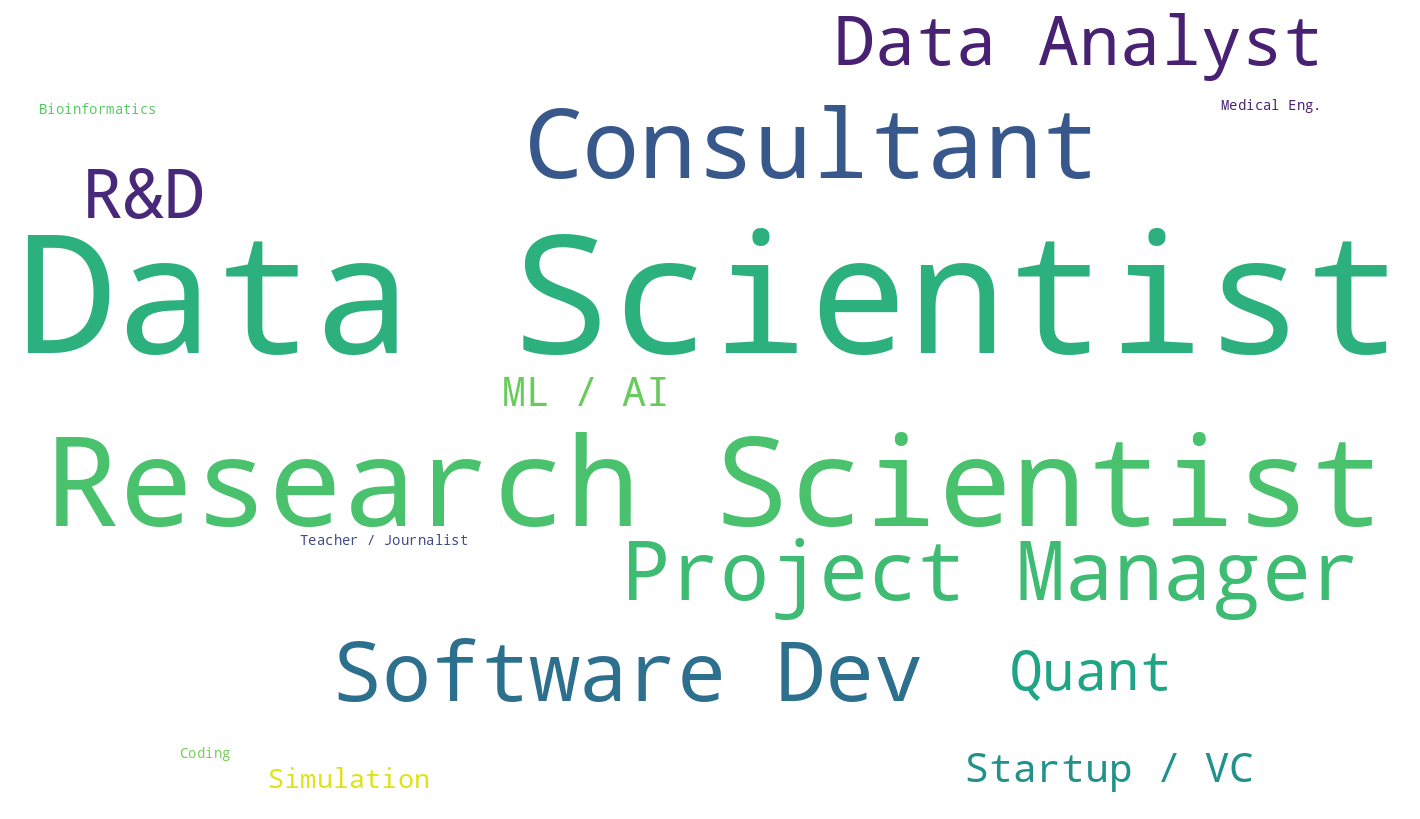
For which roles?

Overview of the target jobs named by participants.
Possible roles emerge, positioning often remains broad.

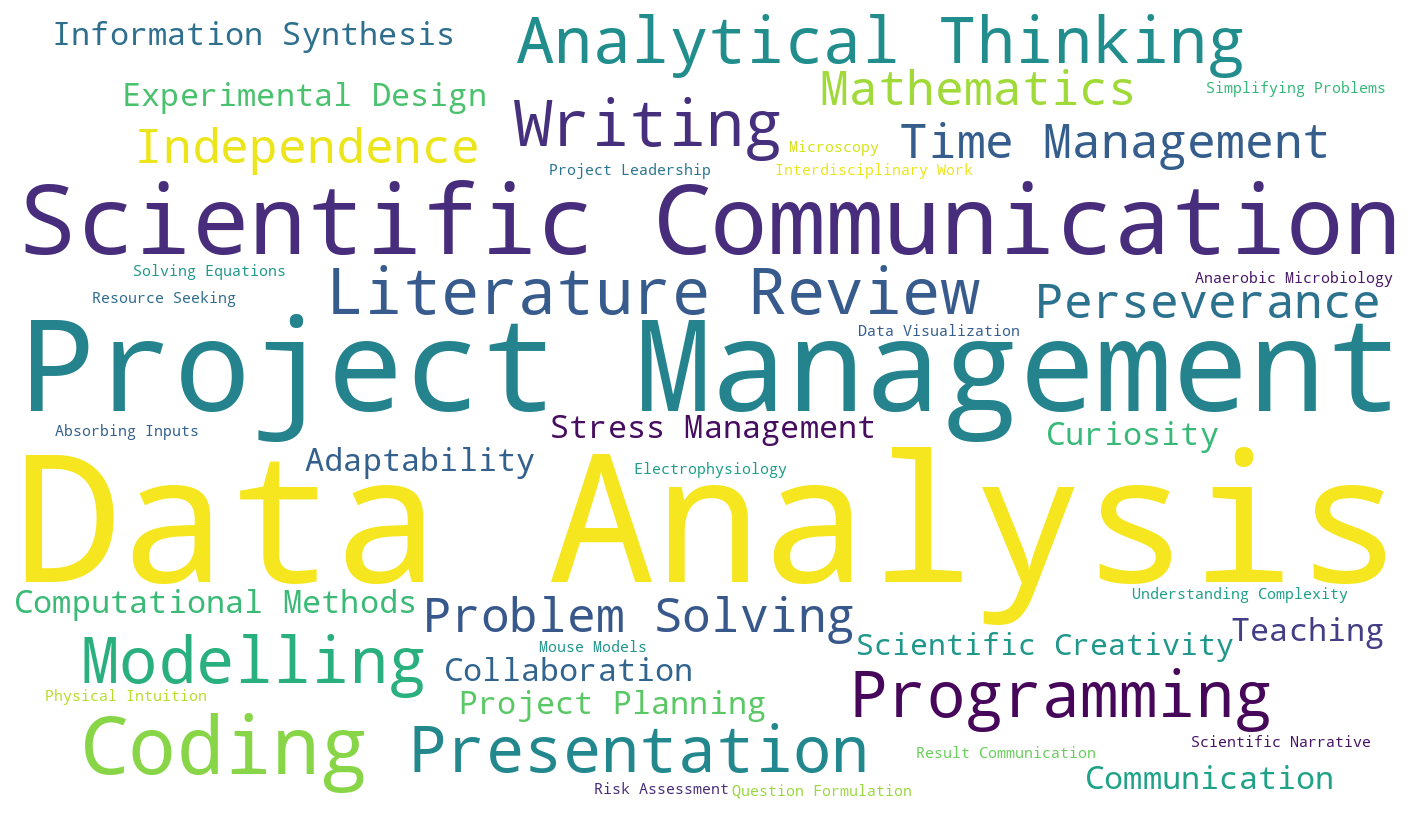
What skills do you name?

Overview of the skills named by participants.
Skills are clearly present.

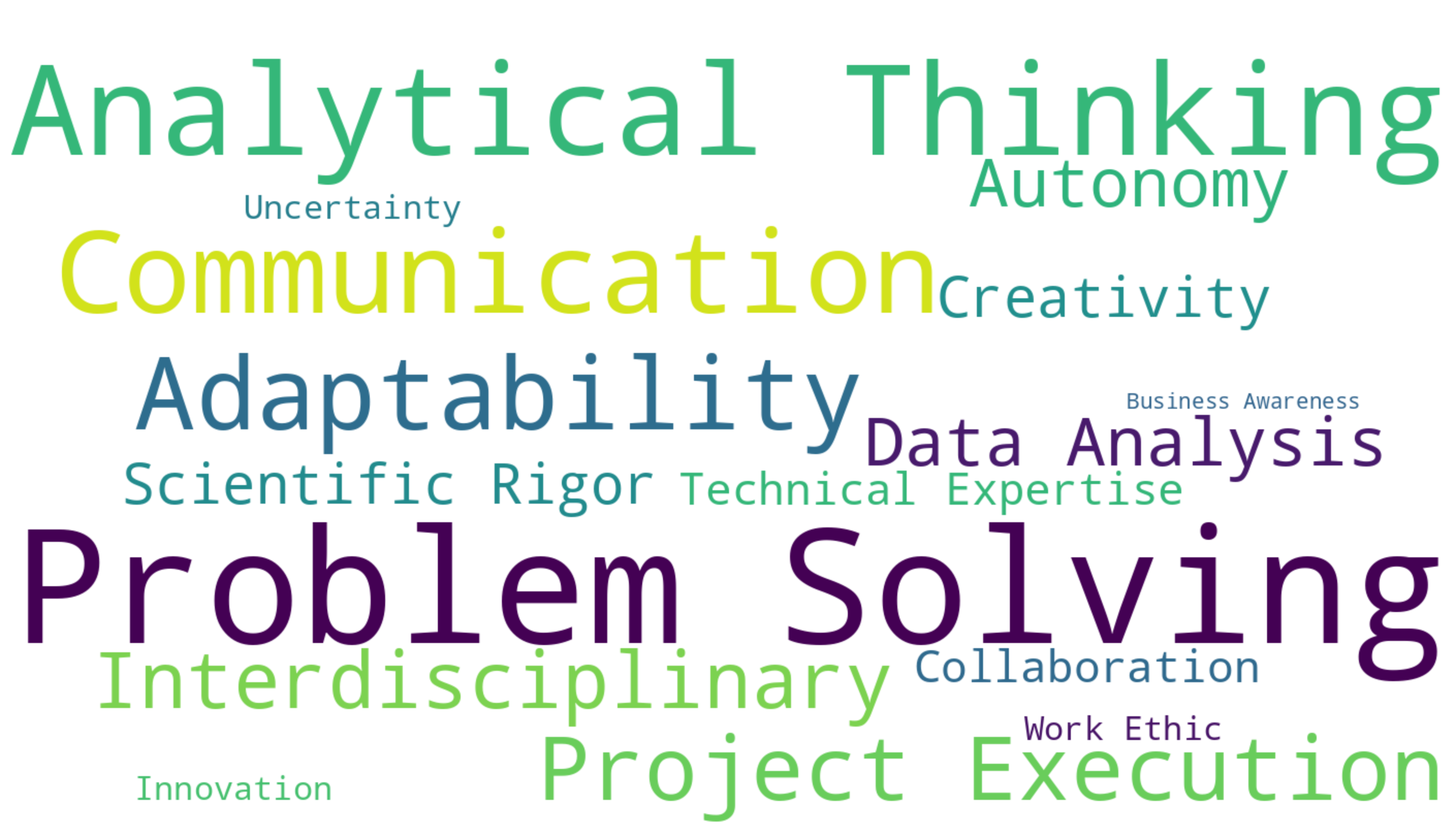
What value do you bring?

Overview of the value participants say they can bring to a company.

How do you think recruiters see PhDs?

Overview of how participants think recruiters see PhD holders.
The imagined recruiter view mixes strong competence with doubts about fit.

III. What The Data Says

How social judgment works

You are not judged only on how smart you are.

Occupational stereotypes: warmth and competence

Occupational stereotypes: warmth and competence 2.3 2.8 3.3 3.8 4.3 4.8 2.3 2.8 3.3 3.8 4.3 4.8 Competence Warmth

Occupational stereotypes: warmth and competence

Occupational stereotypes: warmth and competence 2.3 2.8 3.3 3.8 4.3 4.8 2.3 2.8 3.3 3.8 4.3 4.8 Competence Warmth Staff nurse Assistant nurse

Occupational stereotypes: warmth and competence

Occupational stereotypes: warmth and competence 2.3 2.8 3.3 3.8 4.3 4.8 2.3 2.8 3.3 3.8 4.3 4.8 Competence Warmth Staff nurse Assistant nurse Preschool teacher

Occupational stereotypes: warmth and competence

Occupational stereotypes: warmth and competence 2.3 2.8 3.3 3.8 4.3 4.8 2.3 2.8 3.3 3.8 4.3 4.8 Competence Warmth Staff nurse Assistant nurse Preschool teacher High school teacher

Occupational stereotypes: warmth and competence

Occupational stereotypes: warmth and competence 2.3 2.8 3.3 3.8 4.3 4.8 2.3 2.8 3.3 3.8 4.3 4.8 Competence Warmth Staff nurse Assistant nurse Preschool teacher High school teacher Surgeon

Occupational stereotypes: warmth and competence

Occupational stereotypes: warmth and competence 2.3 2.8 3.3 3.8 4.3 4.8 2.3 2.8 3.3 3.8 4.3 4.8 Competence Warmth Staff nurse Assistant nurse Preschool teacher High school teacher Surgeon Engineer

Occupational stereotypes: warmth and competence

Occupational stereotypes: warmth and competence 2.3 2.8 3.3 3.8 4.3 4.8 2.3 2.8 3.3 3.8 4.3 4.8 Competence Warmth Staff nurse Assistant nurse Preschool teacher High school teacher Surgeon Engineer Researcher

Occupational stereotypes: warmth and competence

Occupational stereotypes: warmth and competence 2.3 2.8 3.3 3.8 4.3 4.8 2.3 2.8 3.3 3.8 4.3 4.8 Competence Warmth Salesperson Chef Store manager Warehouse worker Assistant accountant Cleaning staff Mechanic Accountant Carpenter Heavy machinery operator Office assistants and secretaries Truck driver Systems and software developer Restaurant waiting staff Personal assistants Staff nurse Assistant nurse Preschool teacher High school teacher Surgeon Engineer Researcher

Where PhDs tend to stand

Occupational stereotypes: warmth and competence 2.3 2.8 3.3 3.8 4.3 4.8 2.3 2.8 3.3 3.8 4.3 4.8 Competence Warmth Salesperson Chef Store manager Warehouse worker Assistant accountant Cleaning staff Mechanic Accountant Carpenter Heavy machinery operator Office assistants and secretaries Truck driver Systems and software developer Restaurant waiting staff Personal assistants Staff nurse Assistant nurse Preschool teacher High school teacher Surgeon Engineer Researcher
PhDs likely fit this pattern, but we still need direct data.

LID

Interdisciplinary doctoral lab
Visual identity of the LID interdisciplinary doctoral lab.
Name

Laboratory of Interdisciplinary studies on the Doctorate

About

Founded by Adoc Talent Management in 2021.

Research presented here

Part of the PhD work of Nicolas Lopes.

Portrait of Nicolas Lopes.

Nicolas Lopes
PhD candidate

LID: Laboratory of Interdisciplinary studies on the Doctorate - research presented here includes work by Nicolas Lopes.

The experiment

Question asked

"In your opinion, how do people in general perceive PhD holders?"

Population

267 participants

Composition

103 PhD
164 non-PhD

Study material
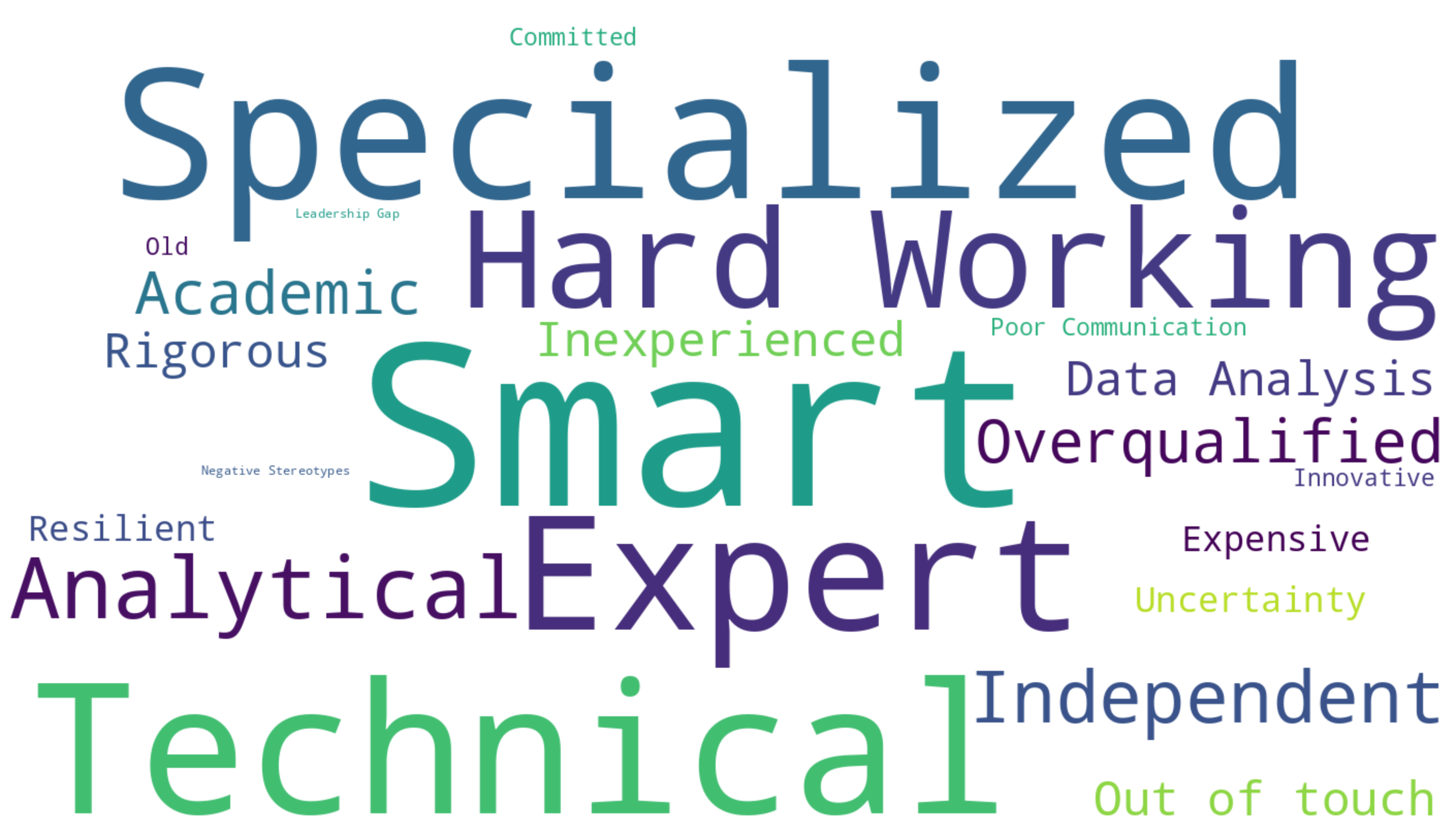
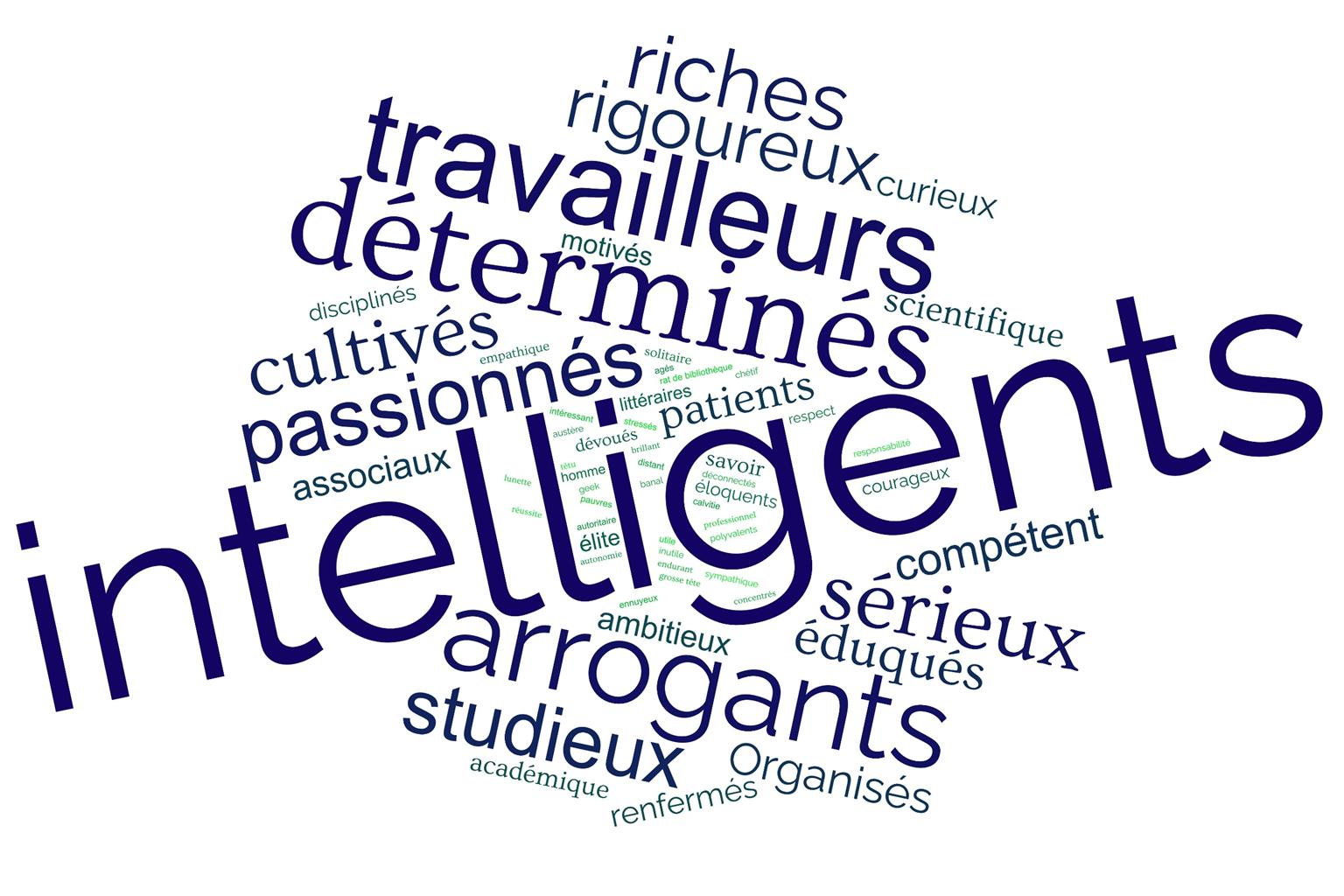
Visual used in the study about how PhD holders are perceived.

Visualization of 669 responses provided by 164 participants.

Source: Lopes & Bran, 2026

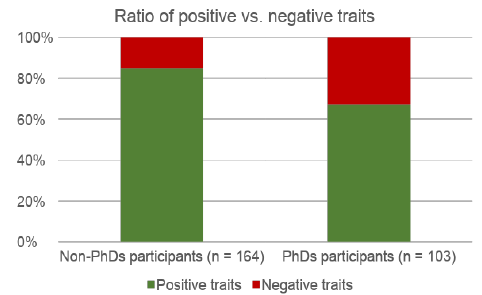
What is the ratio of positive vs negative traits?

The perception gap

Positive vs. negative traits
Bar chart comparing positive and negative traits attributed to PhDs by non-PhDs and PhDs.
  • PhDs attribute about 20% more negative traits to PhD holders than non-PhDs do

Source: Lopes & Bran, 2026

We underestimate how others see us.

But what happens when the judgment comes from recruiters?

Recruiter-side protocol

Sample

189

Recruiters

Candidate profiles

Engineer
PhD holder

Roles evaluated

Technical Lead - execution & problem-solving (1)
Head of R&D - strategic and organizational leadership (2)

Fields

Chemistry
Materials Science

Source: Lopes & Bran, 2026

Do recruiters prefer PhDs or engineers?

When perception affects employability

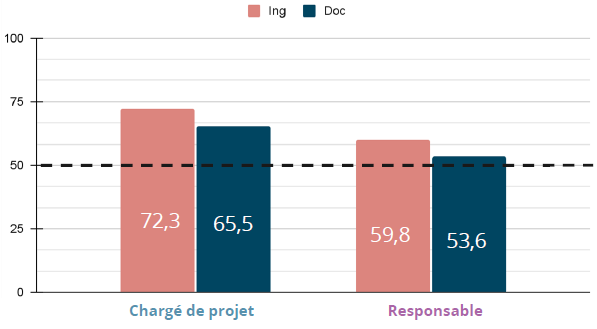
  • In hiring situations, engineers are slightly preferred
  • Not due to competence, but perceived fit
  • There is an observable gap against PhDs
Hiring preference gap
Bar chart comparing how engineers and PhDs are rated in employability.

Share of recruiters (%) willing to hire an engineer or a PhD, by role
(1) Technical lead
(2) Head of R&D

Source: Lopes & Bran, 2026

You do not lose on ability, you lose on perception.

IV. The Paradox

The paradox

You feel confident about your skills
But you doubt your employability

Your competence is recognized
But you expect negative judgments

You are trained to solve complex problems
But you struggle to explain your value

  • High competence, low perceived fit
  • Strong skills, weak translation
  • Confidence in ability, uncertainty in positioning
You struggle to make your value visible.

V. Reconstruction

Let’s rework the words

Keyword
What survey respondents may have meant

Problem solving

“Ability to solve complex and interdisciplinary problems independently or in a team.”

Scientific communication

“Ability to translate complex science into narratives for both scientific and non-scientific audiences.”

Project management

“Ability to tear down a project in smaller pieces. Rational ability to choose next steps.”

A keyword is not enough. Value becomes visible when it is made concrete.

What a PhD really develops

Skill
Critical thinking
Skill
Problem framing
Skill
Project management
Skill
Autonomy
Skill
Data analysis
Skill
Literature review
Skill
Experimental design
Skill
Learning fast
Skill
Decision-making under uncertainty
Skill
Priority setting
Skill
Scientific writing
Skill
Oral communication
Skill
Teaching & mentoring
Skill
Collaboration
Skill
Translating complexity
Skill
Resilience
You already developed more than you usually say.

One rule

If you cannot say it simply, you cannot sell it.

VI. Conclusion

What should remain

  • Start by rethinking your own perception of the PhD
  • Academia is a valuable path, but not the only one
  • Wherever you go, your PhD has value, learn how to name it
  • You must think about what skills you want to develop, to be able to develop them